
Periodontics & Gum Care in Pine Beach, NJ
We have a specialized periodontist who comes in once a week, who can provide special treatments for you if you are suffering from gum disease. Talk to our dentist, Dr. Mariya Medlenov, if you think this may be a treatment you need so that we can set up an appointment. Call Century Dental East at 732-341-6010 to learn more about our periodontal services in Pine Beach, New Jersey!
Periodontics focuses on the prevention, diagnosis and treatment of periodontal disease and other conditions that affect the gums and soft tissues of the mouth. Gum disease, also known as periodontal disease, is an infection caused by bacteria in plaque. When plaque builds up on the teeth, the bacteria irritate and inflame the gum tissues. If this condition is not treated in the early stage, called gingivitis, it can develop into periodontitis, which is the more advanced stage of gum disease. Gingivitis is characterized by red, tender, bleeding and swollen gums; periodontitis additionally involves gum recession and can eventually lead to bone loss and tooth loss. Gingivitis can usually be controlled, and even reversed, with professional cleanings and improved at-home oral care if the condition is diagnosed and treated early. Periodontitis, on the other hand, generally requires more involved, frequent treatment. We are pleased to provide high-quality treatment for gum disease at our office to return your smile to good health.
In addition to focusing on the treatment of periodontal disease, periodontics includes the placement of dental implants. Dental implant placement requires specialized, advanced training for optimal results. To learn more about periodontics and how we can care for your smile, we welcome you to contact us today. Our dentist and team look forward to caring for you!

Signs You May Have Gum Disease
Gum disease is often painless in its early stages, which is why it so frequently goes unnoticed until it is advanced. These are the signals worth acting on.
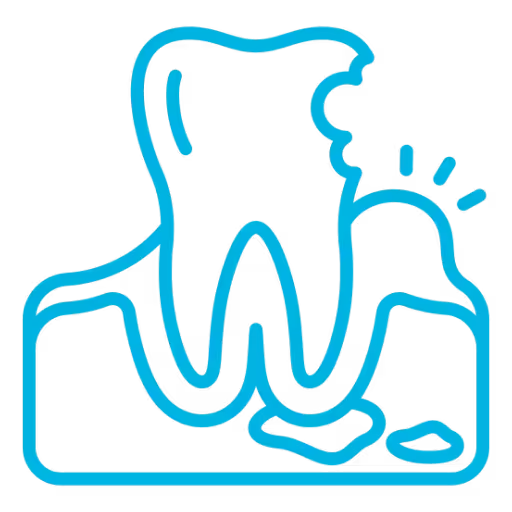
If you recognise two or more of these, book an examination rather than waiting for your next routine visit. Gum disease does not resolve on its own, and the earlier it is caught the less treatment it takes to reverse.

Gums that bleed when you brush or floss. This is the single most common early sign. Healthy gums do not bleed with normal brushing, bleeding is inflammation, not a sign you are brushing too hard.
Red, swollen or tender gums. Healthy gum tissue is firm and pale pink.
Persistent bad breath or a bad taste that does not clear after brushing.
Gums that are pulling away from the teeth, making teeth look longer than they used to.
New sensitivity at the gum line, particularly to cold.
Teeth that feel loose, or a bite that suddenly feels different.
Pus or a small bump on the gum, which indicates infection and needs to be seen promptly.
The Stages of Gum Disease

Gingivitis: the reversible stage
Gingivitis is inflammation of the gum tissue caused by plaque sitting along the gum line. The gums bleed and look puffy, but the bone holding the teeth in place has not yet been affected. This stage is genuinely reversible. For most patients a thorough professional cleaning, combined with a realistic improvement to brushing and flossing at home, returns the gums to health within a few weeks.
Early to moderate periodontitis
If gingivitis is left alone, the inflammation moves below the gum line. Pockets form between the tooth and gum, bacteria collect where a toothbrush cannot reach, and the bone supporting the tooth begins to be lost. Bone loss at this stage cannot be reversed, but it can be stopped. Treatment moves from a routine cleaning to a deeper, more targeted procedure.
Advanced periodontitis
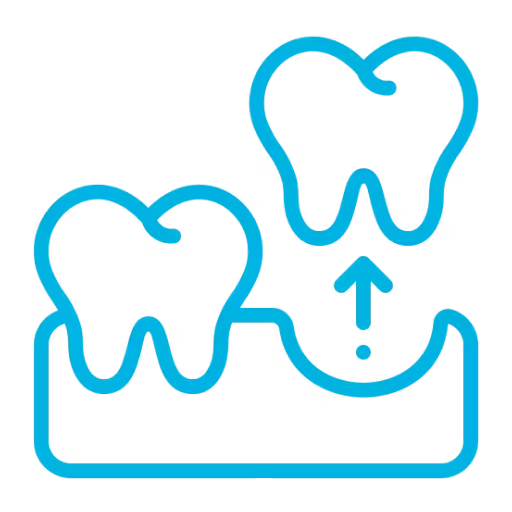
In advanced disease the pockets are deep, significant bone support has been lost, and teeth may loosen or shift. Treatment is more involved and some teeth may not be savable. This is the stage we work hardest to help patients avoid, and it is why the bleeding-gums signal earlier on matters so much.
How We Treat Gum Disease
Treatment is matched to the stage. Most patients need far less than they fear.
Assessment and measurement
Every gum treatment starts with measuring. We chart the depth of the pocket around each tooth and take X-rays to see the bone level. That gives us a baseline number to treat against, and something concrete to re-measure later so you can see whether it is working.
Professional cleaning
For gingivitis, a standard professional dental cleaning removes the plaque and hardened tartar the toothbrush has missed, and the gums are given the chance to recover. We will also go through technique with you, because what happens at home between visits is what determines the result.
Scaling and root planing (deep cleaning)
Where pockets have formed, we clean below the gum line and smooth the root surfaces so the gum tissue can reattach to the tooth. It is usually done with the area numbed, often over two visits treating one side of the mouth at a time. Most patients describe it as more comfortable than they expected. This is the workhorse treatment for early and moderate periodontitis.

Periodontal maintenance
Once the disease is under control it needs keeping there. Patients with a history of periodontitis usually move to a cleaning every three to four months rather than every six, because the pockets recolonise faster. Skipping this is the most common reason gum disease returns.

Restoring what was lost
Where a tooth has already been lost to gum disease, options such as dental implants or a bridge can restore the gap, but only once the surrounding gum and bone are healthy and stable. Treating the disease always comes first.
Do I Need a Periodontist, or Will a General Dentist Do?
This is the question most people are actually asking when they search for a periodontist, and the honest answer is that the majority of gum disease is treated successfully in a general dental practice.
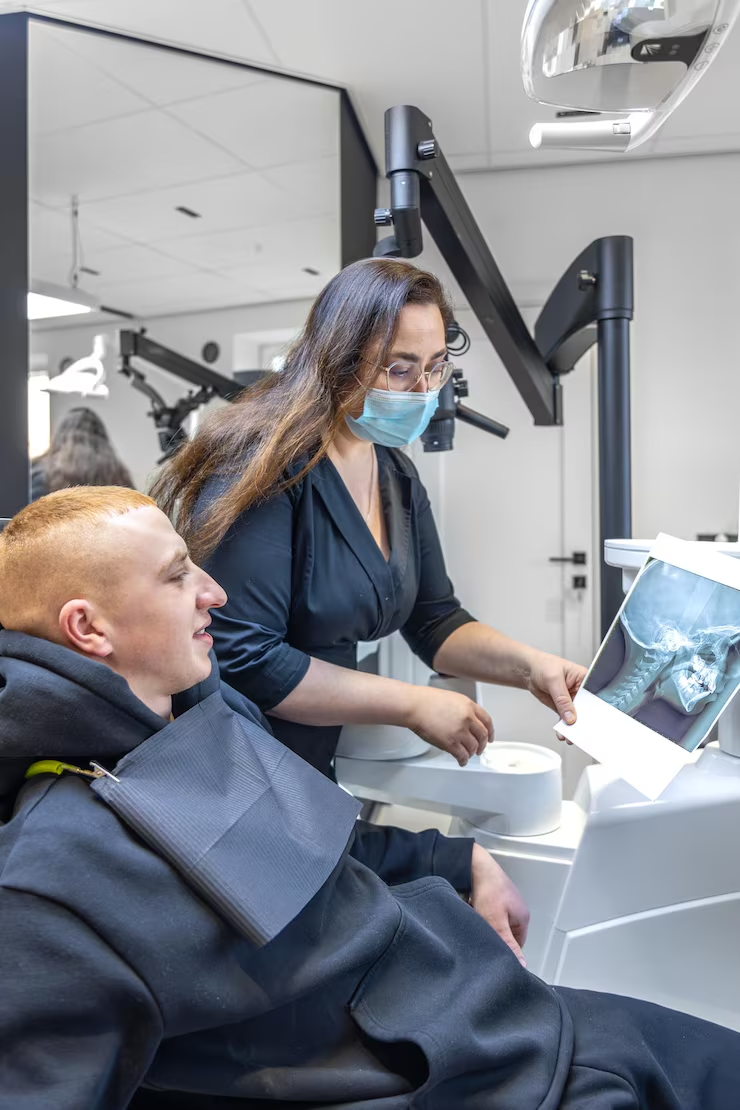
A periodontist is a dentist with several additional years of specialist training in the gums and the bone that supports the teeth. That expertise matters for advanced cases, for gum grafting, and for complex surgical work. It is not required for gingivitis, and it is not usually required for early or moderate periodontitis, both of which are managed with the cleaning and scaling and root planing described above.
Century Dental East is set up for both. Dr. Mariya Medlenov and the team handle assessment, cleanings, scaling and root planing and ongoing maintenance in-house, and we have a periodontist who attends the practice weekly, so patients who do need specialist treatment can receive it here rather than being sent somewhere unfamiliar and starting over with a new set of records.
If you are not sure which category you fall into, that is exactly what a first examination is for. We will measure, tell you plainly what stage you are at, and recommend the least invasive treatment that will actually work.
Why Gum Health Matters Beyond Your Mouth
Periodontal disease is a chronic inflammatory condition, and the research consistently links it with other inflammatory conditions elsewhere in the body, cardiovascular disease and diabetes in particular. The relationship with diabetes runs in both directions: poorly controlled blood sugar makes gum disease harder to treat, and untreated gum disease makes blood sugar harder to control.
It is also the leading cause of tooth loss in adults over thirty-five, ahead of decay. Treating it early is one of the highest-value things you can do for your long-term dental health, and it is considerably cheaper than replacing teeth later.
Noticing blood when you brush? Book a gum assessment at our Pine Beach office, call (732) 341-6010. We see patients from Pine Beach, Toms River, Bayville, Beachwood, Berkeley Township and Ocean Gate, and you can also request an appointment online.
Visit Our Pine Beach Office
Century Dental East: Gentle, Modern Dentistry for Families in Pine Beach, NJ.
241 Washington Avenue, Pine Beach, NJ 08741
(732) 341-6010


Hours
Mon 9:00 a.m. to 7:00 p.m.
Tue 9:00 a.m. to 7:00 p.m.
Wed 9:00 a.m. to 5:00 p.m.
Thu 9:00 a.m. to 5:00 p.m.
Fri-Sun Closed
Serving patients across
- Toms River
- Lakewood
- Lakehurst
- Forked River
- Bayville
- Beachwood
- Pine Beach
- Barnegat Light
- Ocean Gate
- Maple Shade
- Leisure Village
- Cedar Grove
- Waretown
- Howardsville
- Brookville
- Holly Park
- South Toms River