
Dental Bonding in Pine Beach, NJ
If you have chipped or cracked teeth, Dr. Mariya Medlenov offers dental bonding to help repair your smile. Our dentist and team apply a resin composite shaped like your tooth so that you cannot tell the difference between your tooth and the prosthetic. Call Century Dental East at 732-341-6010 to learn more about our dental bonding services in Pine Beach, New Jersey!
Dental bonding is a simple, conservative way to improve the appearance of your smile. During the bonding process, our skilled dentist and team place a composite resin material directly onto the tooth structure. Because the resin is malleable and puttylike when first applied, we can shape and sculpt it to fit your tooth and correct flaws in the tooth’s appearance. The composite resin is then hardened, trimmed and polished to provide a lasting, aesthetic restoration for your smile. Dental bonding typically requires just one visit to our welcoming dental office, and because this treatment usually necessitates little to no tooth preparation, you can rest assured that your visit will be quick and comfortable.
Our dentist may recommend dental bonding in order to close gaps and spaces between teeth, improve misshapen teeth, lighten stained or discolored teeth, or restore chipped or cracked teeth. We will use a shade of composite resin that matches the original color of your teeth for a natural-looking effect. If you would prefer, we can use a slightly lighter shade to whiten the color of your teeth.
For more information on cosmetic dental bonding and how we can help you improve your smile, we welcome you to contact us today.
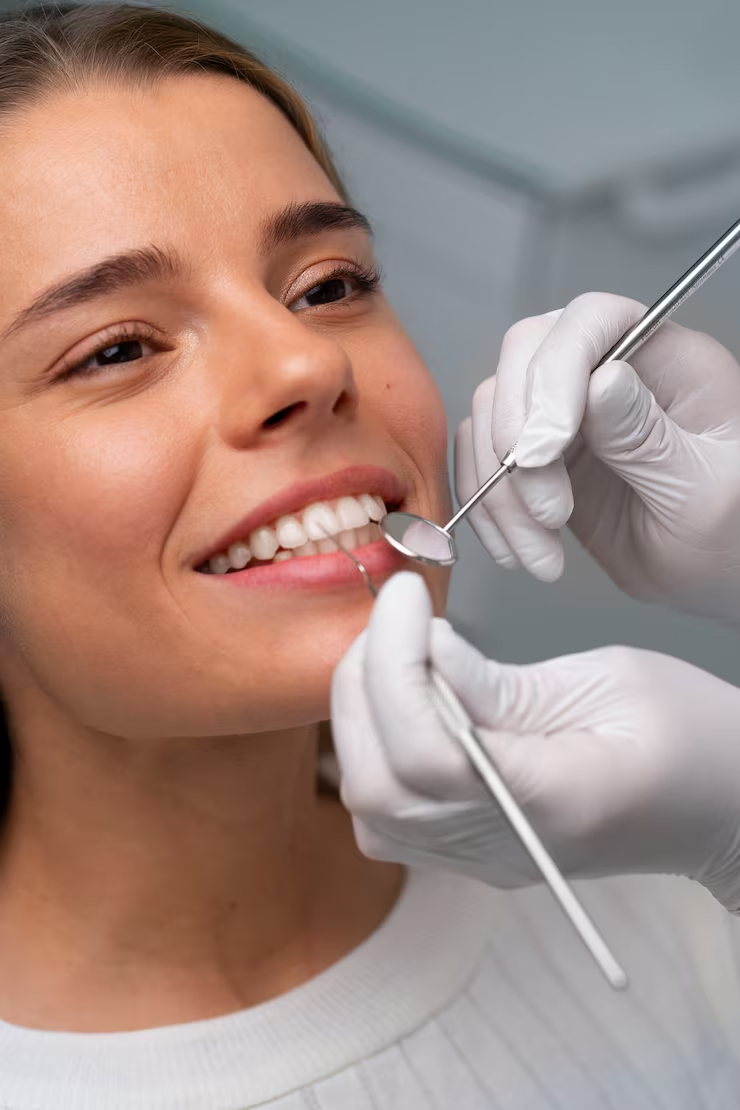
What a dental bonding appointment is like
Bonding is one of the most straightforward cosmetic treatments we offer, and it is usually finished in a single visit.
Step by step
Dr. Medlenov first selects a composite shade against your natural teeth in good light. The tooth surface is lightly conditioned so the resin grips, then the composite is applied and sculpted directly on the tooth. A curing light hardens it in seconds. The last stage is shaping and polishing, which is where the result is either convincing or not, the contour and the surface finish are what make bonded resin read as enamel.
Comfort and time
Because bonding often needs little or no removal of tooth structure, many patients do not need anesthetic at all. Anesthetic is used when bonding is repairing decay or when the area is sensitive. A single small repair takes a short appointment; several teeth take proportionally longer, and we will tell you the plan before we begin. You can eat and drink normally as soon as you leave, though we suggest avoiding strongly staining foods for the first day or two.

One visit. No lab work and no temporaries in most cases.
Conservative. Usually preserves the existing tooth structure.
Adjustable. Composite can be added to, reshaped or repolished later.
Dental bonding compared with veneers and crowns
Bonding, veneers and crowns solve overlapping problems at different scales.
Bonding or veneers?
Composite is shaped in the chair; porcelain veneers are made in a laboratory and bonded on afterward. Porcelain resists staining better and holds a polish longer, but requires enamel to be removed and more than one appointment. Bonding costs less and is generally reversible, which makes it a sensible first step when you want to try a change to the shape of a tooth without committing to it permanently.
Bonding or a crown?
Bonding covers the visible surface. When a tooth is heavily broken down, cracked through, or has had a root canal, it needs full coverage instead, a dental crown wraps the whole tooth and carries the biting force. Trying to rebuild a structurally weak tooth in composite alone tends to end in a repeat fracture. Dr. Medlenov will tell you plainly which category your tooth falls into.
Small chip or gap. Bonding is usually the efficient answer.
Several front teeth being redesigned. Veneers give a more uniform result.
Structural damage or a large old filling. A crown protects the tooth properly.
Discoloration only. Teeth whitening may achieve what you want without adding material at all.
How to keep bonded teeth looking new
Composite resin responds to how you use and care for it more than most restorations do.
Staining
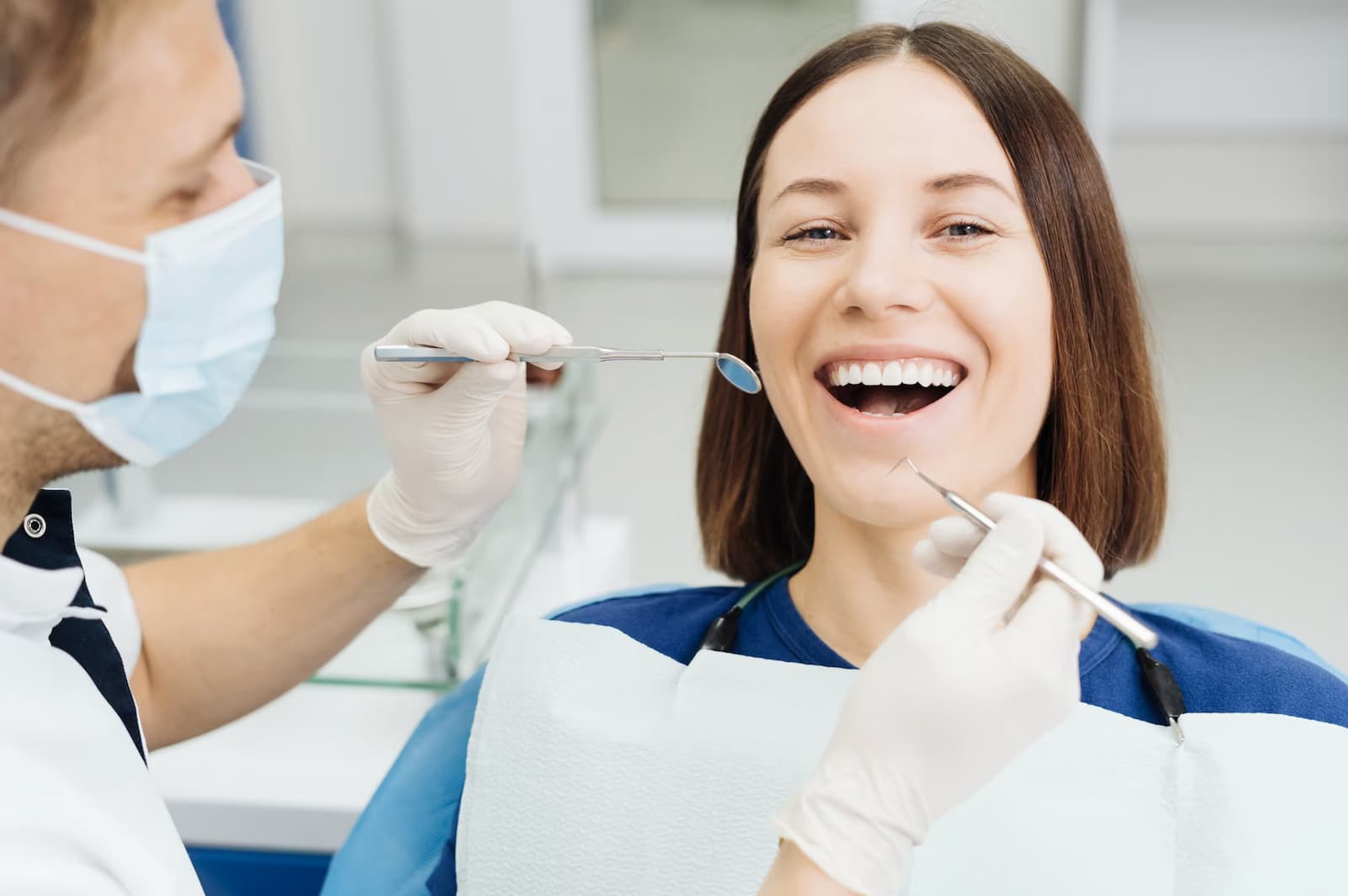
Composite is porous compared with porcelain, so coffee, tea, red wine, dark sauces and tobacco gradually dull it. Rinsing with water after staining drinks and keeping up with professional cleanings both help. Worth knowing before you start: whitening products lighten natural enamel but not composite, so if you plan to whiten your teeth, do that first and let us match the bonding to the final shade.
Chipping and wear
Bonded edges are the vulnerable part, particularly on front teeth. Biting nails, chewing ice or pens, and using teeth as tools are the usual causes of a chip. Night grinding wears the composite faster; a nightguard is the simple fix. When bonding does chip or discolor, it can usually be repaired or repolished rather than replaced entirely, which is one of its practical advantages.
Brush and floss normally. Bonded surfaces need the same care as enamel.
Keep up cleanings. Book through our general and family dentistry services.
Avoid hard biting habits. This is the single biggest factor in how long bonding lasts.
Mention rough edges. A quick repolish restores the finish.
Book dental bonding in Pine Beach
Century Dental East welcomes patients from Pine Beach, Beachwood, Toms River and across Ocean County at 241 Washington Avenue. If a chipped edge or a small gap has been bothering you, bonding is often the quickest and least invasive way to address it.
Call (732) 341-6010 or contact us to arrange a consultation with Dr. Medlenov.
Visit Our Pine Beach Office
Century Dental East: Gentle, Modern Dentistry for Families in Pine Beach, NJ.
241 Washington Avenue, Pine Beach, NJ 08741
(732) 341-6010


Hours
Mon 9:00 a.m. to 7:00 p.m.
Tue 9:00 a.m. to 7:00 p.m.
Wed 9:00 a.m. to 5:00 p.m.
Thu 9:00 a.m. to 5:00 p.m.
Fri-Sun Closed
Serving patients across
- Toms River
- Lakewood
- Lakehurst
- Forked River
- Bayville
- Beachwood
- Pine Beach
- Barnegat Light
- Ocean Gate
- Maple Shade
- Leisure Village
- Cedar Grove
- Waretown
- Howardsville
- Brookville
- Holly Park
- South Toms River