
Invisalign® Clear Aligners in Pine Beach, NJ
Invisalign straightens teeth with a series of clear, removable aligners instead of brackets and wires. Most adult cases take about 6 to 18 months, and aligners need to be worn 20 to 22 hours a day. Dr. Mariya Medlenov starts with a digital scan, so you see your projected result and timeline before you commit.
What Is Invisalign?
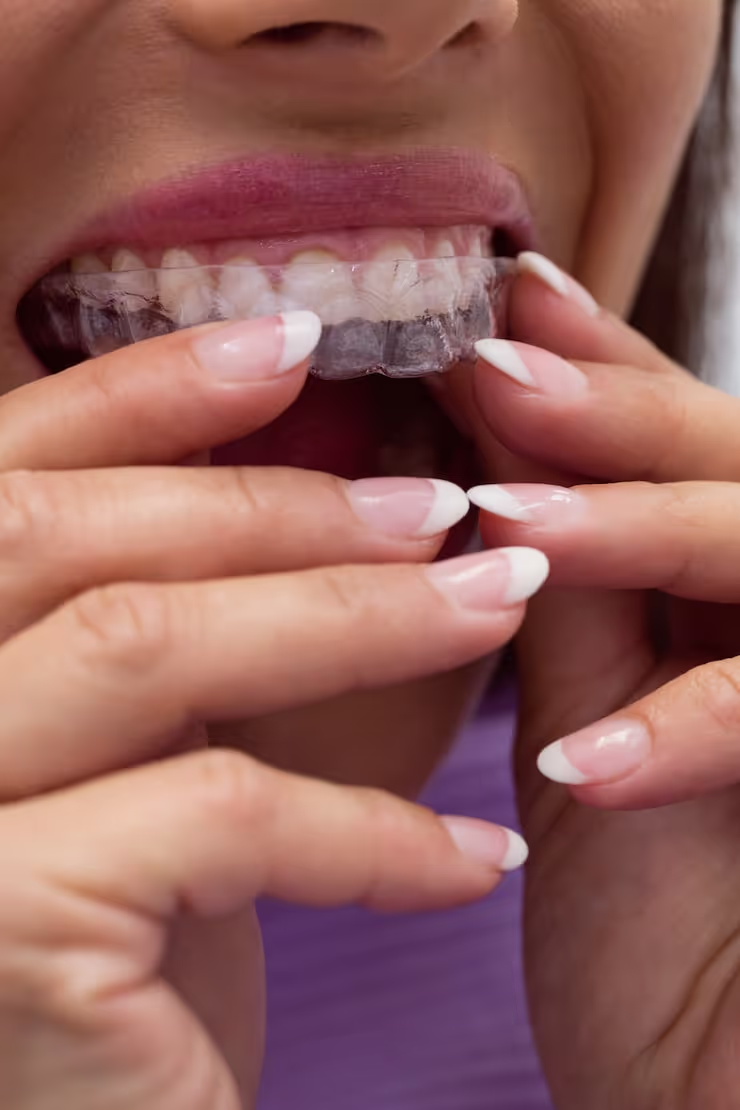
Invisalign is a revolutionary orthodontic system that uses custom-made, clear aligners to gradually shift your teeth into the desired position. Each aligner is made of a smooth, comfortable, BPA-free plastic that won’t irritate your cheeks and gums like traditional braces often can. Plus, because they’re removable, you can eat, brush, and floss as you normally would, ensuring your dental hygiene doesn’t take a backseat during your treatment.
Why Choose Invisalign Clear Aligners?
- Virtually Invisible: Invisalign aligners are clear and hardly noticeable, offering a discrete treatment option.
- Comfort: With smooth, custom-fitted aligners, Invisalign eliminates the discomfort of sharp brackets and tightening wires.
- Convenience: Invisalign aligners are removable, making it easy to maintain your dental hygiene and enjoy your favorite foods.
- Efficiency: For many cases, Invisalign can straighten teeth faster than traditional braces, with treatment times varying depending on individual needs.
Personalized Care Tailored To Your Smile
Dr. Mariya Medlenov and our team at Century Dental East are committed to providing personalized care tailored to your unique dental needs and cosmetic goals. During your initial consultation, we will conduct a thorough examination and discuss your desired outcomes to create a customized Invisalign treatment plan just for you.
Begin Your Invisalign Journey Today
If you’re ready to take the first step towards a straighter, more confident smile with Invisalign, contact Century Dental East. Our team is here to guide you through every step of the process, from initial consultation to the moment you reveal your new smile. Call us at 732-341-6010 to schedule your appointment and discover how Invisalign clear aligners can transform your smile and your life.
Is Invisalign Right for You?
Clear aligners handle most of the alignment problems adults come to us with, but not all of them. Here is the honest picture.
What Invisalign treats well

Crowded or overlapping teeth
Gaps and spacing between teeth
Teeth that have shifted back after braces in your teens, one of the most common reasons adults start treatment
Mild to moderate overbite, underbite and crossbite
A single tooth that sits out of line and bothers you every time you see a photograph
When something else may suit you better
Severe bite problems, teeth that need substantial rotation, and cases requiring significant movement of the tooth root can be beyond what aligners do predictably. Traditional braces or a referral to an orthodontist is the better answer in those cases, and we will tell you so at the consultation rather than starting a treatment that will disappoint you.

The one requirement that decides everything
Aligners only work while they are in your mouth. The target is twenty to twenty-two hours a day, out for meals and for brushing, in the rest of the time, including overnight. Patients who manage that finish on schedule. Patients who leave them out for hours at a time drift behind, and the treatment takes longer. If you already know that will be a struggle, say so at the consultation and we will talk it through.
What Invisalign Treatment Looks Like, Step by Step
1. Consultation and digital scan
We examine your teeth and gums, discuss what you want changed, and take a digital scan of your mouth, no impression trays or putty. If there is untreated decay or gum inflammation, that is dealt with first; aligners move teeth, they do not fix underlying problems.
2. Your treatment plan and preview
The scan is used to map the movement of each tooth in sequence. Before you commit, you see a simulation of the projected result and an estimate of how long it will take. This is the point to ask questions, it is far easier to adjust the plan now than midway through.
3. Your aligners arrive
Each set is worn for roughly one to two weeks before you move to the next. Some patients need small tooth-coloured attachments bonded to a few teeth to give the aligners something to grip; they are removed at the end.
4. Check-ins along the way
You will come in periodically so we can confirm the teeth are tracking to plan and hand over the next stage of aligners. Visits are short and there are no wires to tighten.
5. Retainers: the part people skip
Teeth drift back toward their original positions if nothing holds them. A retainer at the end is not optional; it is what makes the result permanent. This is the single most common reason adults end up needing treatment a second time.
How Long Does Invisalign Take, and What Does It Cost?
Treatment time
Most adult cases run somewhere between six and eighteen months. Minor crowding or a relapse after childhood braces can finish at the short end; a case involving bite correction takes longer. You will be given a projected number at your consultation, based on your actual scan rather than an average, and how closely you stick to the wear time is what decides whether you hit it.
What affects the cost
Aligner treatment is priced by case, because a small amount of movement genuinely costs less than a full correction. The factors are how far the teeth have to travel, how many sets of aligners that requires, and how long you will be in treatment. We give you the full figure in writing before you start, not a range, and no surprises partway through.
Insurance and payment
Many dental plans include an orthodontic benefit that applies to clear aligners, and treatment can usually be paid for from an FSA or HSA. Our front desk will check your specific plan and tell you what it covers before you decide. Financing options are set out on our financial options page, and it is worth asking about any current special offers when you book.
Invisalign or Traditional Braces?
Both straighten teeth. They differ in how visible they are, how much they interfere with daily life, and how much of the outcome depends on you.
If you are weighing the two, our blog compares them in more depth in Invisalign vs. braces for adults.
Appearance. Aligners are close to invisible at conversational distance. For adults working in client-facing roles this is usually the deciding factor.
Eating. Aligners come out for meals, so nothing is off the menu. Braces rule out hard and sticky foods for the duration.
Cleaning. You brush and floss normally with aligners out. Cleaning around brackets and wires is genuinely harder, and decalcification marks around brackets are a real risk with braces.
Comfort. Aligners feel tight for a day or so with each new set. Braces involve brackets that can rub the cheek and periodic tightening appointments.
Discipline. This is the honest trade-off. Braces work whether or not you are motivated, because you cannot remove them. Aligners only work if you wear them.
Complexity. Braces still handle the most severe cases more predictably.
Frequently Asked Questions About Invisalign
How much does Invisalign cost in Pine Beach?
Invisalign is priced by case, because a small amount of movement costs less than a full correction. The main factors are how far your teeth need to travel, how many sets of aligners that takes, and how long treatment lasts. After your digital scan we give you the full figure in writing before you start, with no surprises partway through. Our financial options page explains how payment works.
Does insurance cover Invisalign?
Many dental plans include an orthodontic benefit that applies to clear aligners, and treatment can usually be paid for from an FSA or HSA. Plans differ, so our front desk checks your specific coverage and tells you what it includes before you decide. Financing is set out on our financial options page, and it is worth asking about current special offers when you book.
Am I a candidate for Invisalign?
Clear aligners work well for crowded or overlapping teeth, gaps, teeth that shifted back after childhood braces, and mild to moderate overbite, underbite or crossbite. Severe bite problems, large rotations and significant root movement can be beyond what aligners do predictably, and braces or an orthodontist referral may suit you better. Dr. Medlenov tells you honestly at the consultation which group your case falls into.
What happens during Invisalign treatment?
Treatment starts with an exam and a digital scan, with no putty impressions. You see a simulation of the projected result and an estimated timeline before committing. Each set of aligners is worn for roughly one to two weeks, sometimes with small tooth-coloured attachments for grip. Short check-ins confirm your teeth are tracking to plan, and a retainer at the end keeps the result in place.
How long does Invisalign take?
Most adult cases take somewhere between six and eighteen months. Minor crowding or relapse after childhood braces can finish at the shorter end, while bite correction takes longer. Your projected timeline comes from your own scan rather than an average. Wear time decides whether you hit it: aligners need to be in for twenty to twenty-two hours a day, out only for meals and brushing.
Is Invisalign better than traditional braces?
Both straighten teeth. Aligners are close to invisible, come out for meals and make brushing and flossing easier, and they feel tight for a day or so with each new set. Braces cannot be removed, so they work whether or not you are motivated, and they still handle the most severe cases more predictably. Our Invisalign vs braces guide compares them in more depth.
Does Invisalign hurt?
Most patients describe each new set of aligners as feeling tight or full for a day or two before it eases off. That pressure is a sign the teeth are moving, and it rarely interferes with work or daily life. There are no brackets to rub the cheeks and no wires to tighten. Speech can feel slightly different for the first day or two while your tongue adjusts.
Do I need a retainer after Invisalign?
Yes. Teeth drift back toward their original positions if nothing holds them, so a retainer at the end of treatment is not optional. It is what makes the result last, and skipping it is the most common reason adults end up needing treatment a second time. Many patients also finish with professional whitening once their teeth are straight.
Invisalign in Pine Beach, Toms River & Ocean County
Our practice is on Washington Avenue in Pine Beach, a short drive from Toms River, Bayville, Beachwood, Berkeley Township and Ocean Gate. Patients looking for Invisalign in Toms River often assume they need to travel to a specialist orthodontic practice, for most straightforward cases, treatment with your own general dentist is more convenient and keeps your routine care and your alignment treatment under one roof.
Invisalign also pairs naturally with other cosmetic dentistry work. Many patients straighten first and then finish with professional whitening, since whitening an aligned smile gives a noticeably better result than whitening a crowded one. Where a tooth is chipped or misshapen as well as out of line, dental bonding or porcelain veneers can complete the result.
Ready to find out whether you are a candidate? Call (732) 341-6010 or request a consultation online. We will scan your teeth, show you the projected result, and give you the timeline and the cost before you commit to anything.
Visit Our Pine Beach Office
Century Dental East: Gentle, Modern Dentistry for Families in Pine Beach, NJ.
241 Washington Avenue, Pine Beach, NJ 08741
(732) 341-6010


Hours
Mon 9:00 a.m. to 7:00 p.m.
Tue 9:00 a.m. to 7:00 p.m.
Wed 9:00 a.m. to 5:00 p.m.
Thu 9:00 a.m. to 5:00 p.m.
Fri-Sun Closed
Serving patients across
- Toms River
- Lakewood
- Lakehurst
- Forked River
- Bayville
- Beachwood
- Pine Beach
- Barnegat Light
- Ocean Gate
- Maple Shade
- Leisure Village
- Cedar Grove
- Waretown
- Howardsville
- Brookville
- Holly Park
- South Toms River