
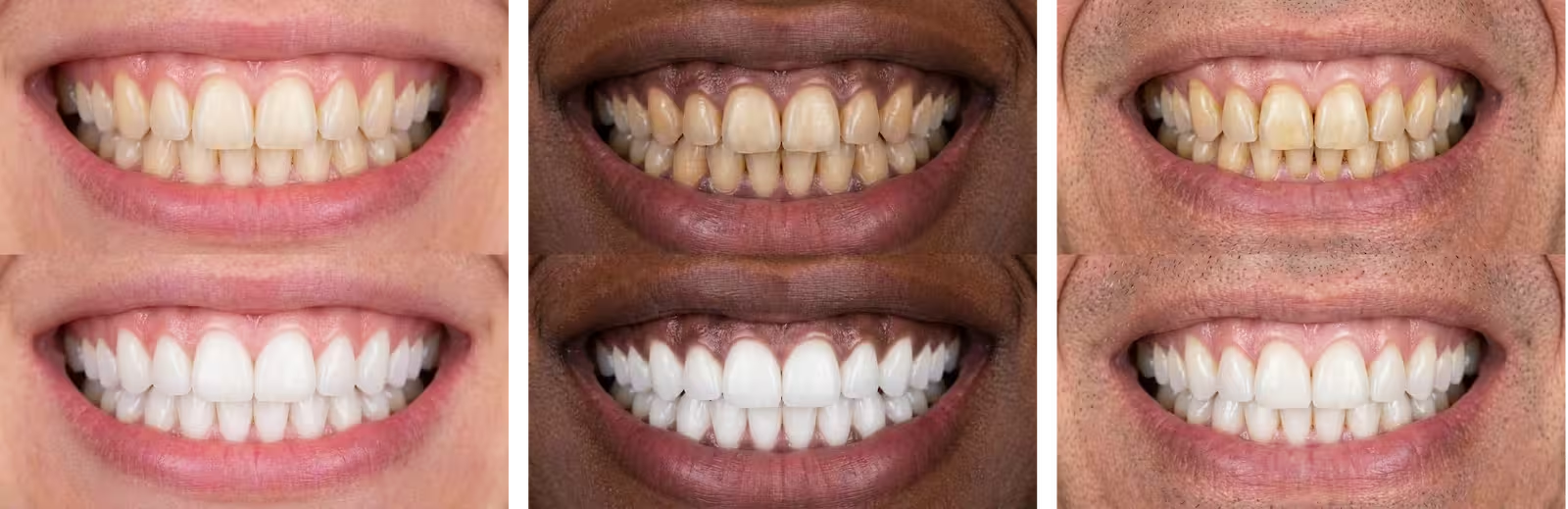
Whitening sensitivity happens when the peroxide gel passes through enamel and briefly irritates the nerve inside the tooth. It usually shows up as short zingers with cold air or cold drinks, starts within a day of treatment, and fades in 24 to 48 hours. Desensitizing toothpaste and shorter wear times prevent most of it.
Thinking about whitening but worried about sensitive teeth? Call Century Dental East in Pine Beach at (732) 341-6010, or read more about professional teeth whitening in Pine Beach, NJ. We see patients from Pine Beach, Toms River, Bayville, Beachwood, Berkeley Township and Ocean Gate.
Why Whitening Makes Teeth Sensitive
Enamel looks solid, but it is not sealed. Under it sits dentin, a softer layer threaded with thousands of microscopic tubules that run toward the nerve. Whitening gel is designed to travel through enamel and break apart the stain molecules trapped underneath, and while it is doing that, some of it reaches the dentin tubules.
The nerve responds to that temporary chemical traffic the same way it responds to cold: with a quick, sharp signal. That is the zinger patients describe. It is a reaction to the process, not a sign that the gel is damaging the tooth, and it settles once the tubules rehydrate and the peroxide clears.
Whitening also dries teeth out slightly during treatment. A dehydrated tooth is temporarily more reactive, which is why sensitivity often peaks in the first several hours and then eases steadily.
Who Is Most Likely to Feel It
Some mouths are simply more reactive than others. At your consultation, Dr. Mariya Medlenov, DDS looks for the factors below before recommending a whitening plan.
- Existing cold sensitivity. If ice water already bothers you, whitening will likely amplify that for a day or two.
- Gum recession. Where gums have pulled back, root surface is exposed. Roots have no enamel, so gel contact there feels much stronger.
- Enamel wear. Grinding, acidic diets and aggressive brushing thin enamel and shorten the distance to the nerve.
- Untreated decay or a cracked filling. Gel that reaches a cavity or leaks under a failing restoration can cause real, lasting pain rather than a passing zinger.
- Recent dental work. A tooth treated in the last few weeks is still calming down and reacts more strongly.
- Very dark starting shade. Deeper stains usually need more contact time, and more contact time means more chance of sensitivity.
This is the main reason store-bought strips cause more trouble than supervised whitening. A drugstore kit cannot tell the difference between healthy enamel and a tooth with a hairline crack. An exam can.
How Long Sensitivity Lasts
Knowing the normal timeline keeps a routine reaction from feeling alarming.
During and right after treatment
Zingers can begin while the gel is on and continue for the first few hours afterward. They tend to be brief, a second or two each, and are triggered by cold air, cold water or breathing in sharply.
The first 24 hours
This is usually the peak. Cold drinks are the most common trigger, and a general background tenderness across the front teeth is normal.
24 to 48 hours
Most patients notice a clear drop-off. By the end of the second day, sensitivity is typically mild or gone.
Beyond 72 hours
Sensitivity that is still strong after three days, or that is concentrated in one specific tooth rather than spread across several, is worth a phone call. That pattern points to something other than the whitening itself, such as decay, a crack or a failing filling. Call our Pine Beach office at (732) 341-6010 so we can take a look.
How to Prevent Whitening Sensitivity
Most sensitivity is preventable. These steps work whether you are doing in-office whitening, custom take-home trays, or the combination of both that the KoR system allows.
Start desensitizing toothpaste two weeks early
Toothpaste containing potassium nitrate calms the nerve response, and toothpaste with stannous fluoride helps seal the dentin tubules. Either one works better as preparation than as a rescue. Brush with it twice a day for two weeks before you begin, and keep using it throughout treatment.
Have a cleaning and exam first
Whitening gel works unevenly over plaque and tartar, and it can cause genuine pain if it reaches a cavity. A professional dental cleaning and a full exam clear both problems before whitening starts. It is also the point where Dr. Medlenov confirms that whitening is the right answer for your kind of staining.
Use shorter sessions rather than stronger gel
If you are prone to sensitivity, spreading treatment over more days at shorter wear times is usually kinder than pushing for the fastest possible result. The end shade is the same. Tell us at the consultation if your teeth are reactive, and we will build the schedule around it.
Ask about fluoride
A professional fluoride treatment before or after whitening helps strengthen enamel and reduce the nerve response. It is a small addition that makes a noticeable difference for sensitive patients.
Make sure trays fit properly
Custom trays made from a scan of your own teeth hold the gel against enamel and keep it off your gums. One-size boil-and-bite trays let gel spill onto soft tissue, which causes gum irritation that patients often mistake for tooth sensitivity.
Skip very hot and very cold food on treatment days
Room-temperature drinks for a day or two give the nerve less to react to. It is simple, and it helps.
What to Do if Sensitivity Starts
If you are in the middle of a whitening course and your teeth are complaining, here is the practical order of operations.
- Pause for a day. Skipping a session does not undo your progress. It gives the nerve time to settle.
- Load a tray with desensitizing gel or toothpaste. Wearing potassium nitrate toothpaste in your whitening tray for 15 to 30 minutes is one of the most effective at-home fixes.
- Shorten the next session. Cut wear time roughly in half and build back up.
- Keep drinks lukewarm. Cold is the main trigger.
- Use a soft brush, gently. Scrubbing adds wear on already reactive enamel.
- Consider an over-the-counter pain reliever. Used as directed on the label, it can take the edge off for a day.
- Call us if it is not improving. Sharp pain in one tooth, or pain that lingers past three days, deserves an exam rather than another round of gel.
Sensitivity and the Kind of Whitening You Choose
In-office whitening is supervised. Your gums are shielded, the gel is placed precisely, and treatment stops the moment you say you are uncomfortable. Take-home trays use a gentler concentration over more days, which suits reactive teeth well, but they depend on you following the schedule. Many patients do best with both: a supervised appointment to make the big shade change, then trays to fine-tune and maintain it.
Dr. Medlenov recommends the version that fits your enamel, your starting shade and your schedule. She also checks for existing fillings, crowns and veneers first, because whitening gel does not change the color of dental work and that has to be planned for from the start.
Costs for whitening are set per case, since an in-office appointment, take-home trays, or a combination of the two are different amounts of treatment. You get a clear estimate before anything begins. Our financial options page explains the payment choices available at our Pine Beach office.
Sensitivity Is Not a Reason to Skip Whitening
Almost every patient who worries about sensitivity can still whiten comfortably. The difference is preparation: an exam first, desensitizing toothpaste in advance, well-fitted trays, and a schedule built around how your teeth actually respond. If you want to know how long your results will hold once you get there, our guide to how long KoR teeth whitening lasts covers maintenance in detail.
To talk it through, call Century Dental East at (732) 341-6010 or contact our Pine Beach office. We are at 241 Washington Avenue, Pine Beach, NJ 08741, and we welcome patients from across Ocean County.
Frequently Asked Questions
Is teeth whitening sensitivity normal?
Yes. Short, sharp zingers triggered by cold are the most common side effect of whitening, and they are a temporary nerve reaction rather than damage. They usually appear within a day of treatment and fade within 24 to 48 hours.
How long does whitening sensitivity last?
For most patients it peaks in the first 24 hours and is largely gone by 48 hours. Sensitivity that is still strong after three days, or focused on one tooth, should be checked by a dentist rather than waited out.
Does professional whitening cause more sensitivity than drugstore strips?
Not necessarily. Professional whitening uses stronger gel but places it precisely, with your gums protected and an exam beforehand. Strips often leak gel onto gums and cannot detect decay or cracks, which is why reactions to them can be worse and harder to explain.
Can I whiten if I already have sensitive teeth?
Usually yes, with a modified plan. Dr. Medlenov looks for the cause of your existing sensitivity first, then adjusts gel strength, wear time and the number of sessions. Desensitizing toothpaste beforehand and fluoride treatment make a real difference.
Does whitening damage enamel?
Professionally supervised whitening is not expected to harm healthy enamel. The concern is overuse and unsupervised use, particularly on teeth with existing wear, recession, decay or cracked restorations, which is why an exam comes first.
What should I do if one tooth hurts after whitening?
Pain isolated to a single tooth is different from general sensitivity and often points to a cavity, a crack or a leaking filling. Stop whitening and call our Pine Beach office at (732) 341-6010 so the tooth can be examined.

